6月23日、赤穂市の交通公園の路面清掃作業は、曇空に恵まれて、身体的な負荷が軽く、ようやく「ロータリーエリア」の清掃を完了するする事が出来ました。
On June 23rd, the road cleaning work at Ako City's traffic park was blessed with cloudy skies, making the physical strain lighter, and we were finally able to complete the cleaning of the "rotary area."
『 ロータリーエリア / Rotary Area 』
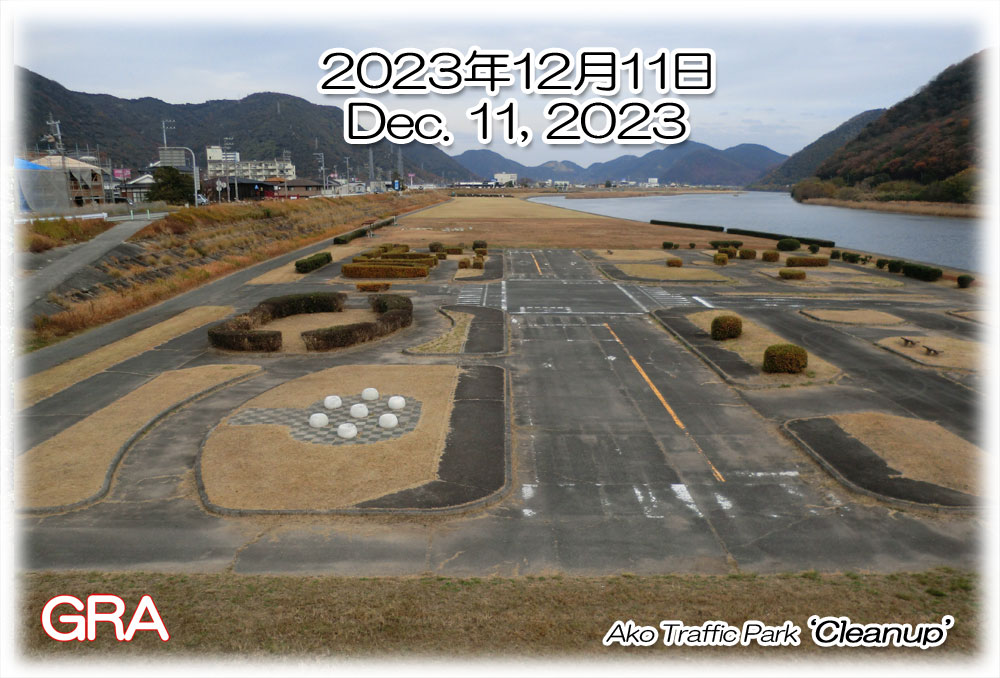
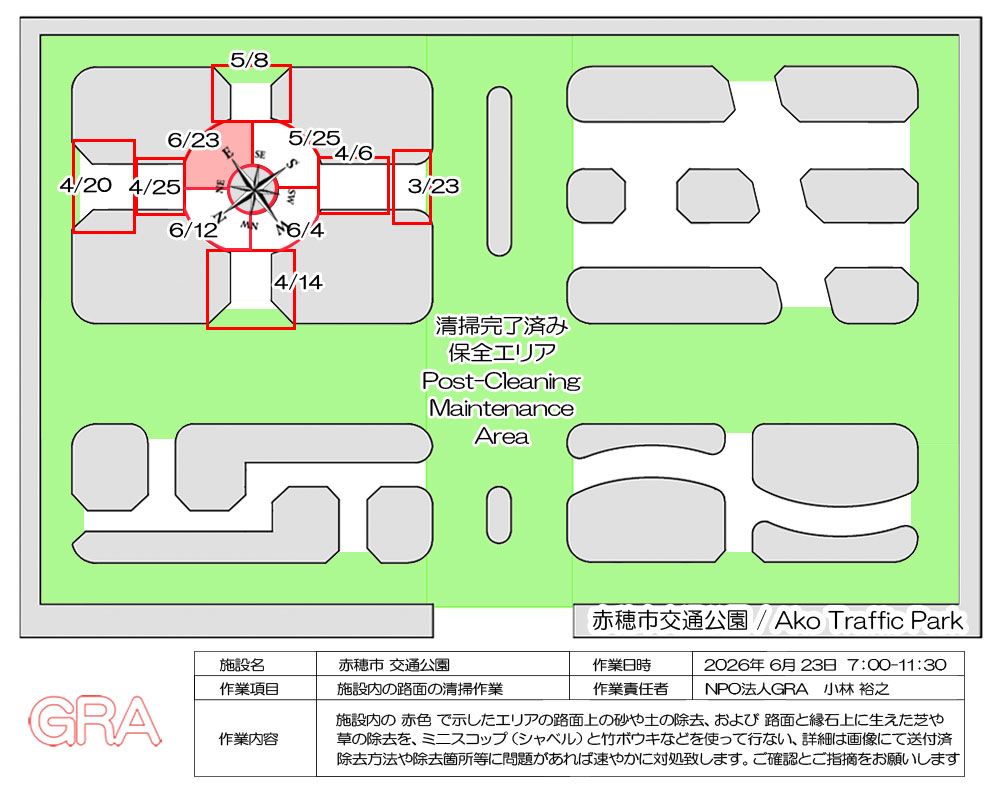
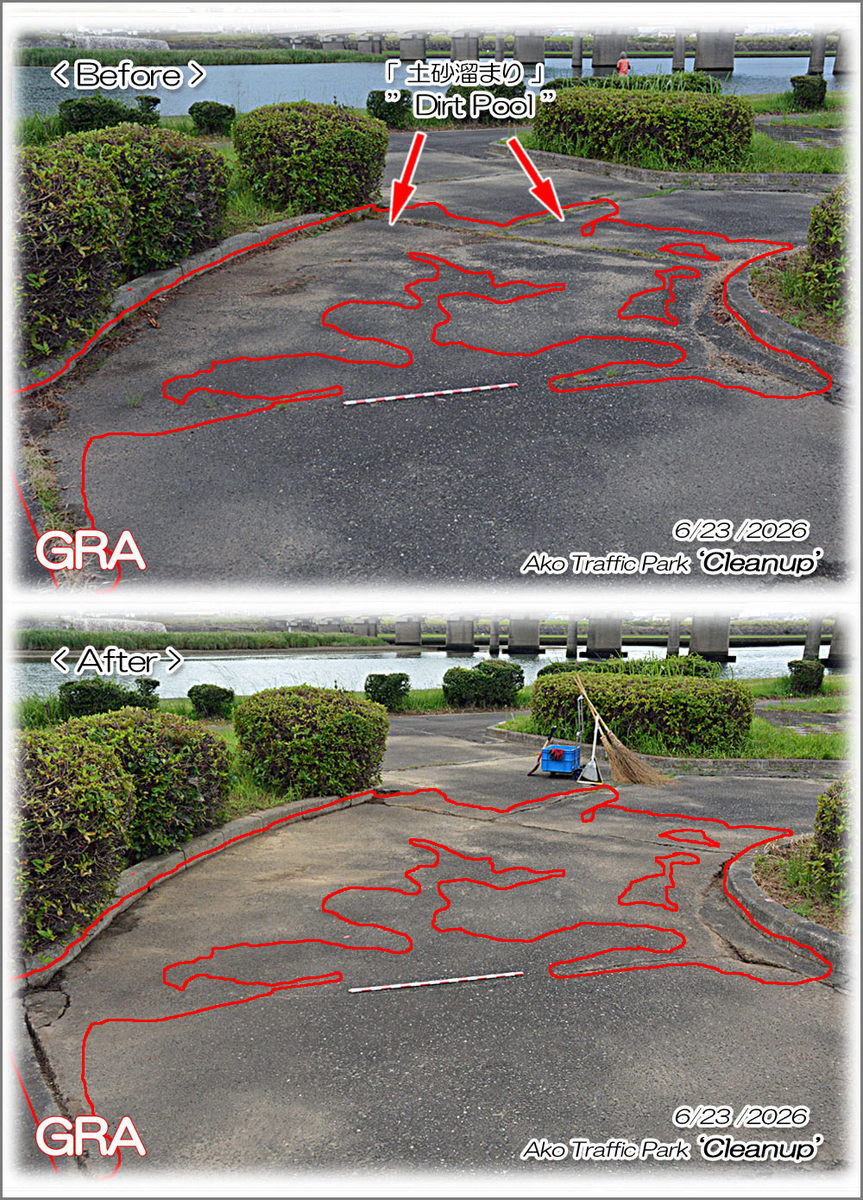
今回も、路面の浸食と破壊が最も顕著な『ロータリーエリア』の清掃でしたが、最後に残ったエリアは草たちに浸食された箇所が “比較的” 少なく、曇り空だった事もあり、前回までよりも少し早めに終えられました。そして、これで、ようやく『ロータリーエリア』の清掃は一段落です。後は、定期的な保全作業程度で済む様に願っています。
This time, we cleaned the "Rotary Area," where road erosion and destruction are most evident. However, the last remaining area had relatively few areas encroached upon by weeds, and the cloudy weather allowed us to finish a little earlier than last time. With this, the cleaning of the "Rotary Area" is finally complete. We hope that only periodic maintenance will be necessary from now on.
『 路面破壊 / Road Destruction 』
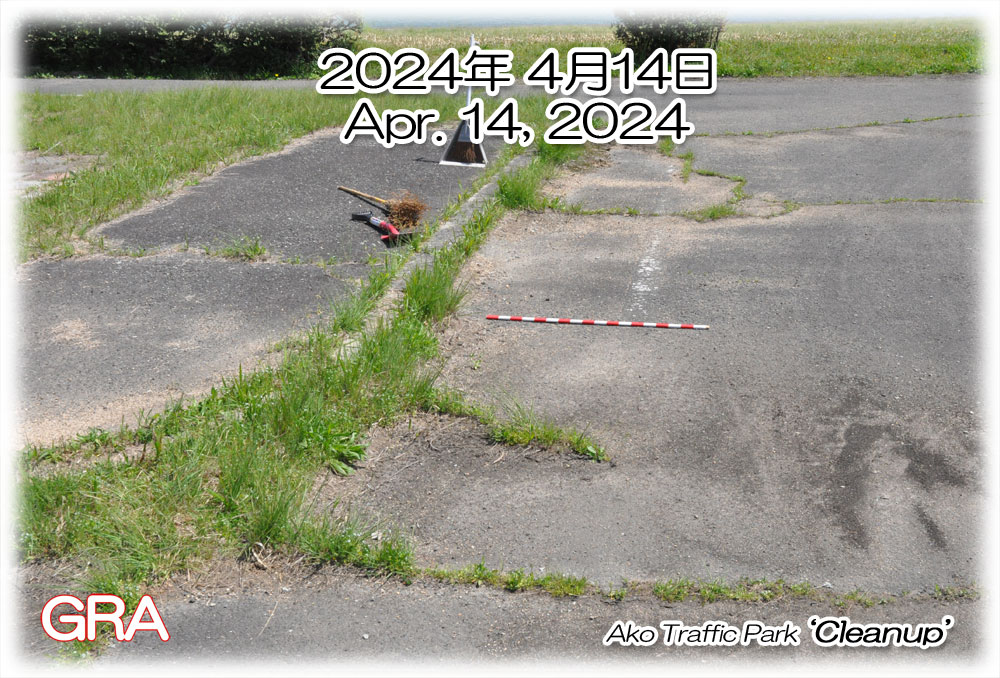
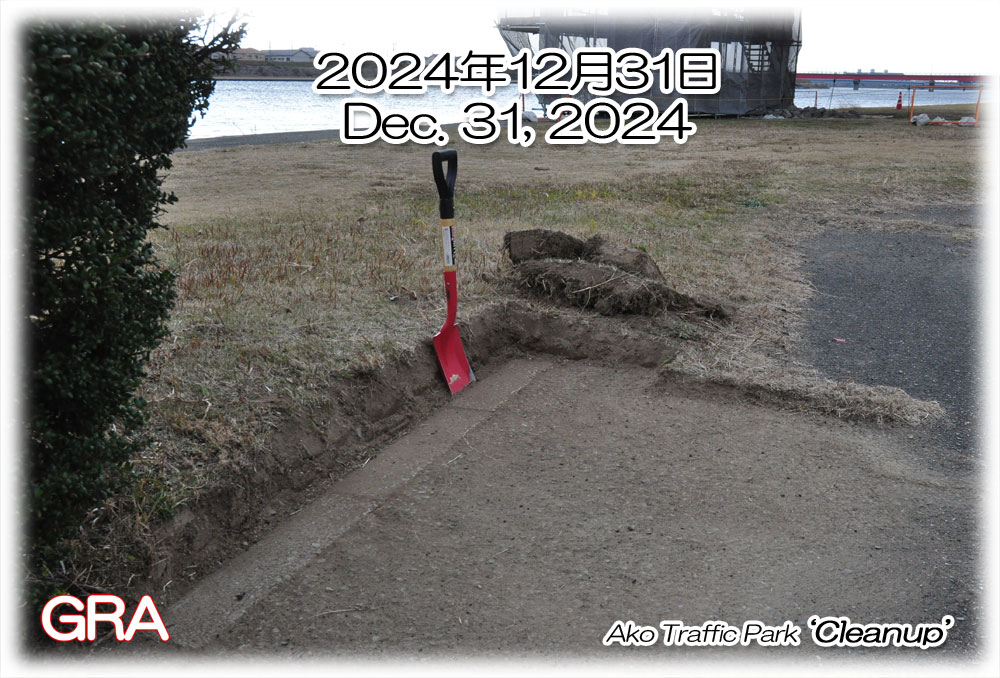
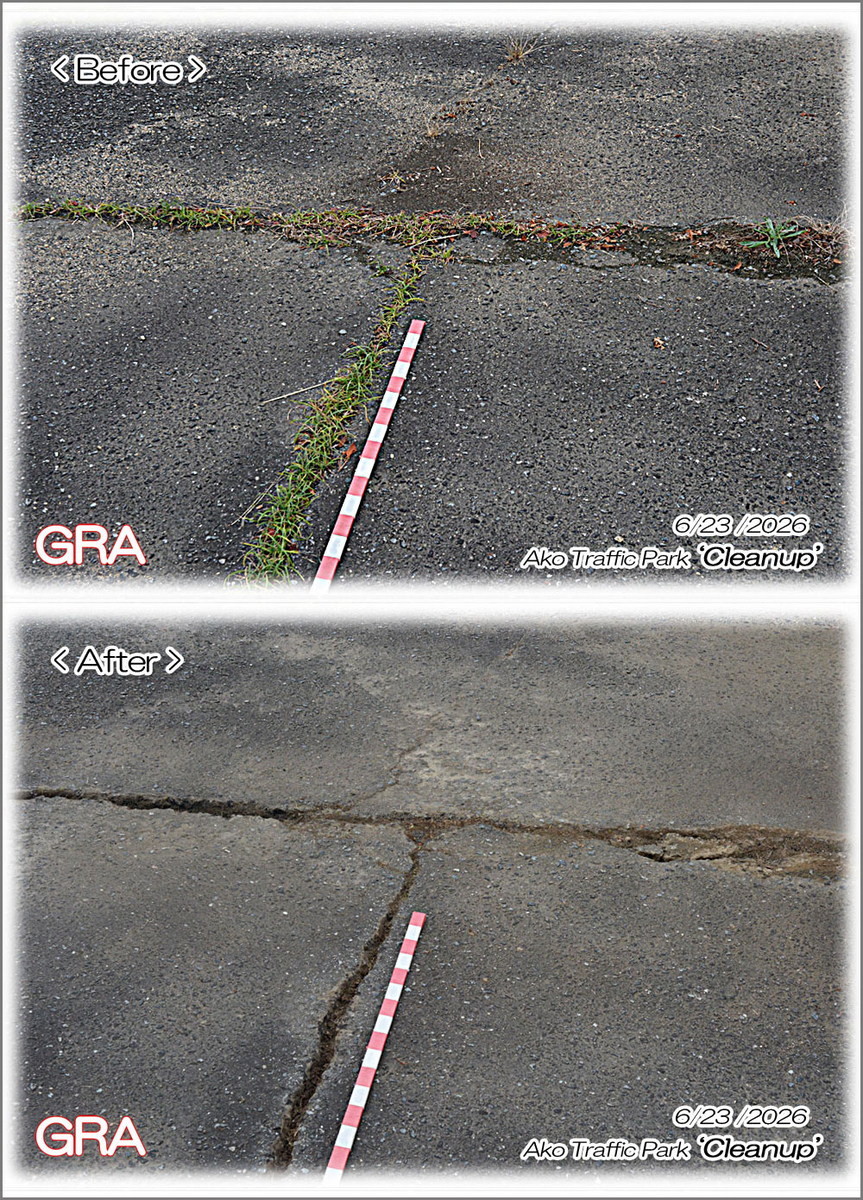
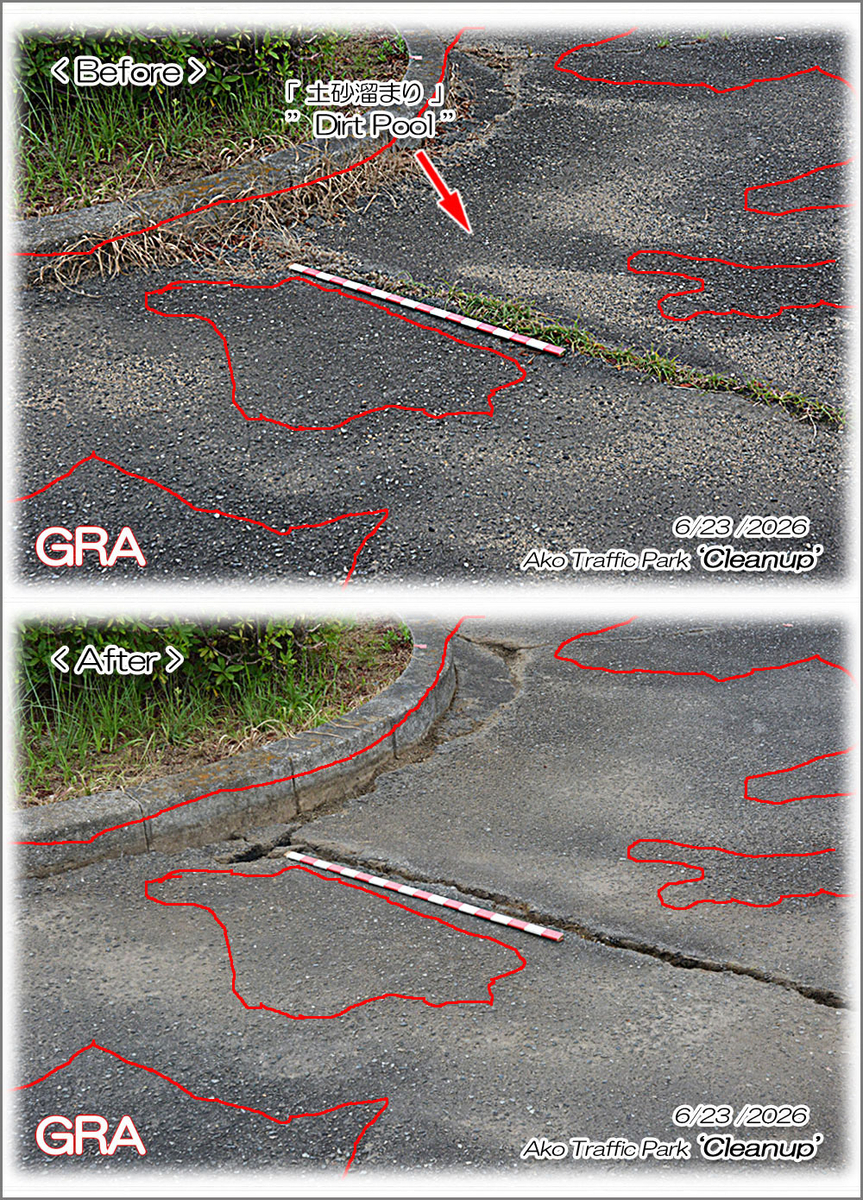
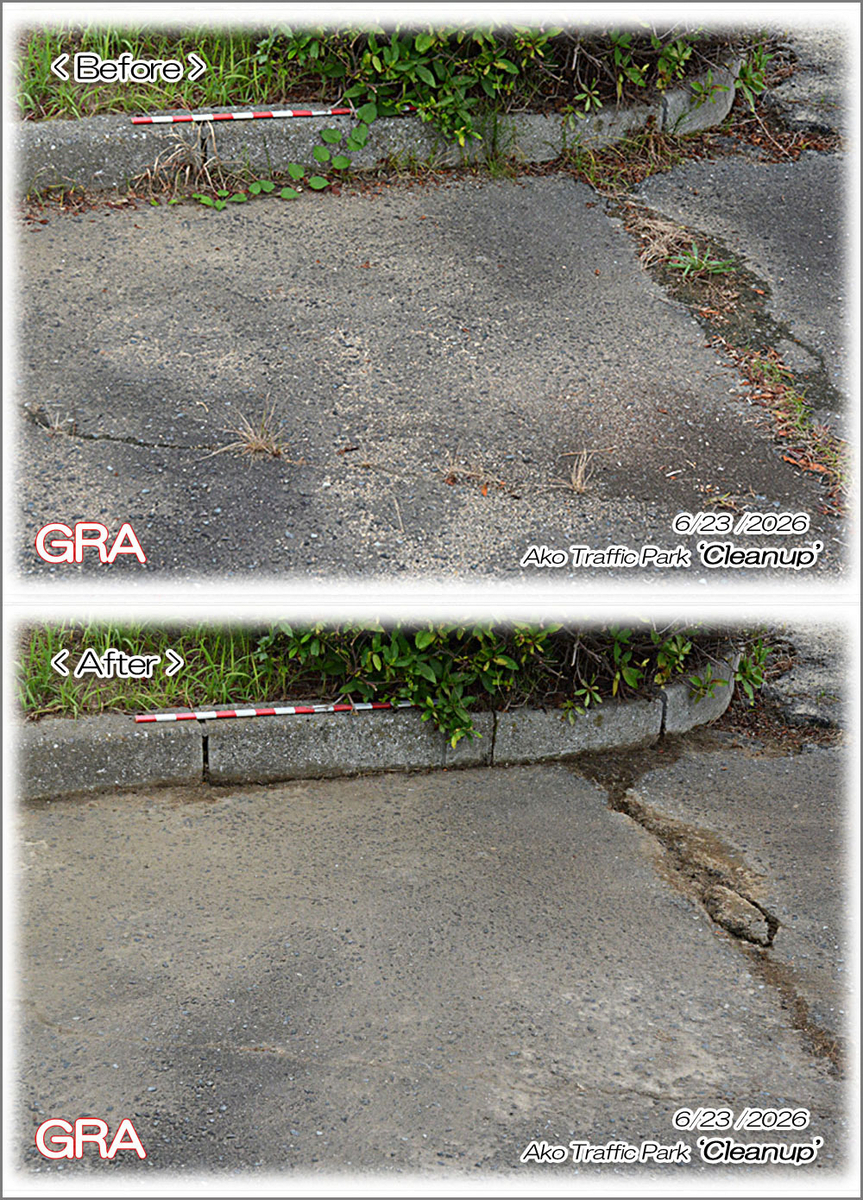
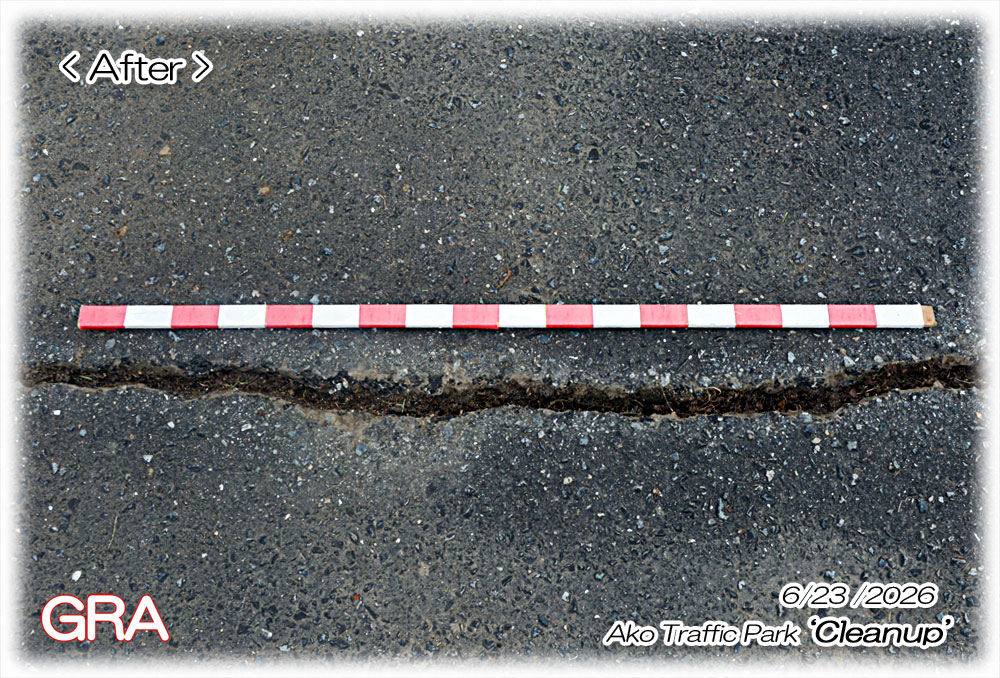
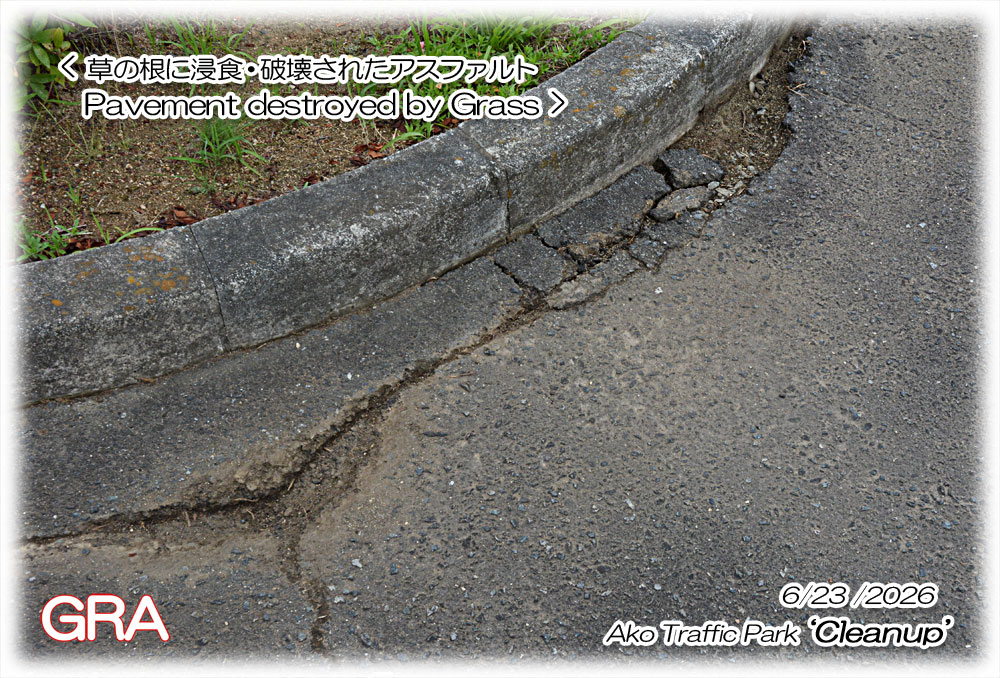
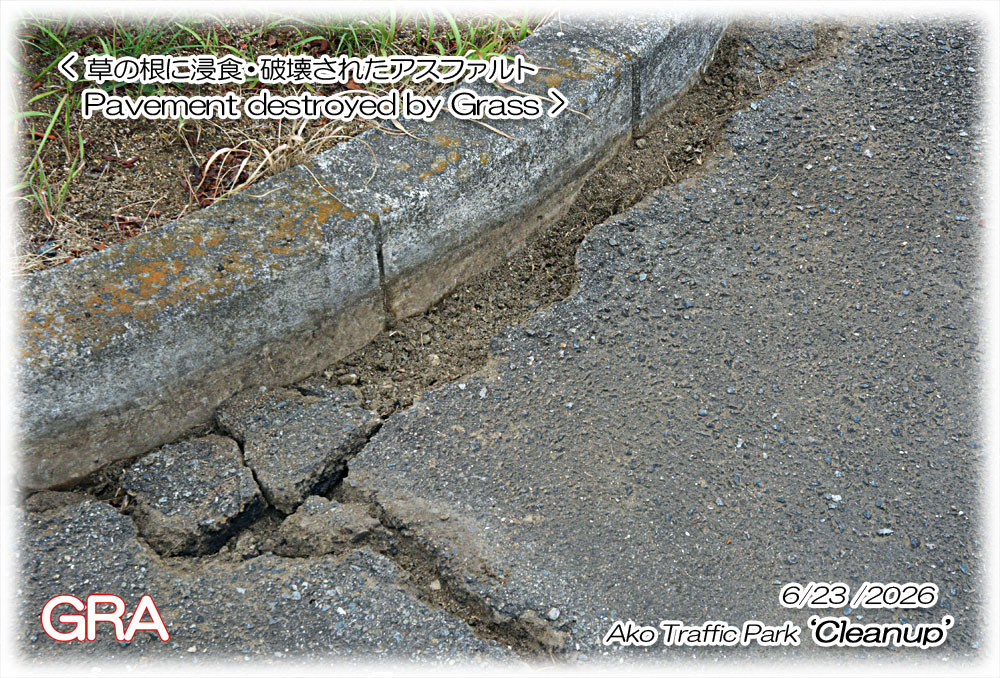
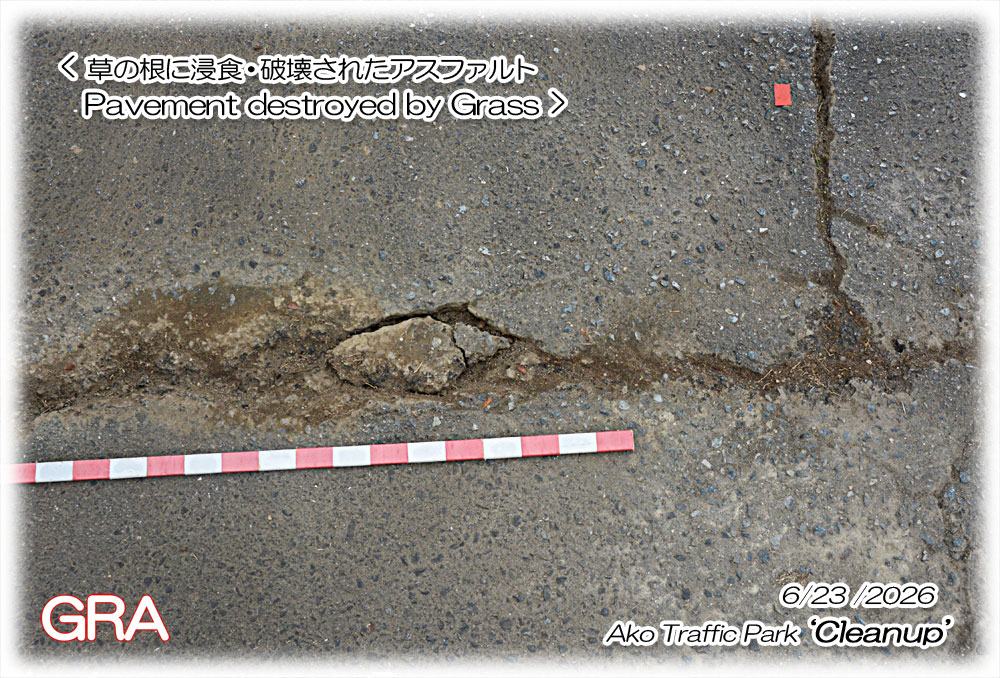
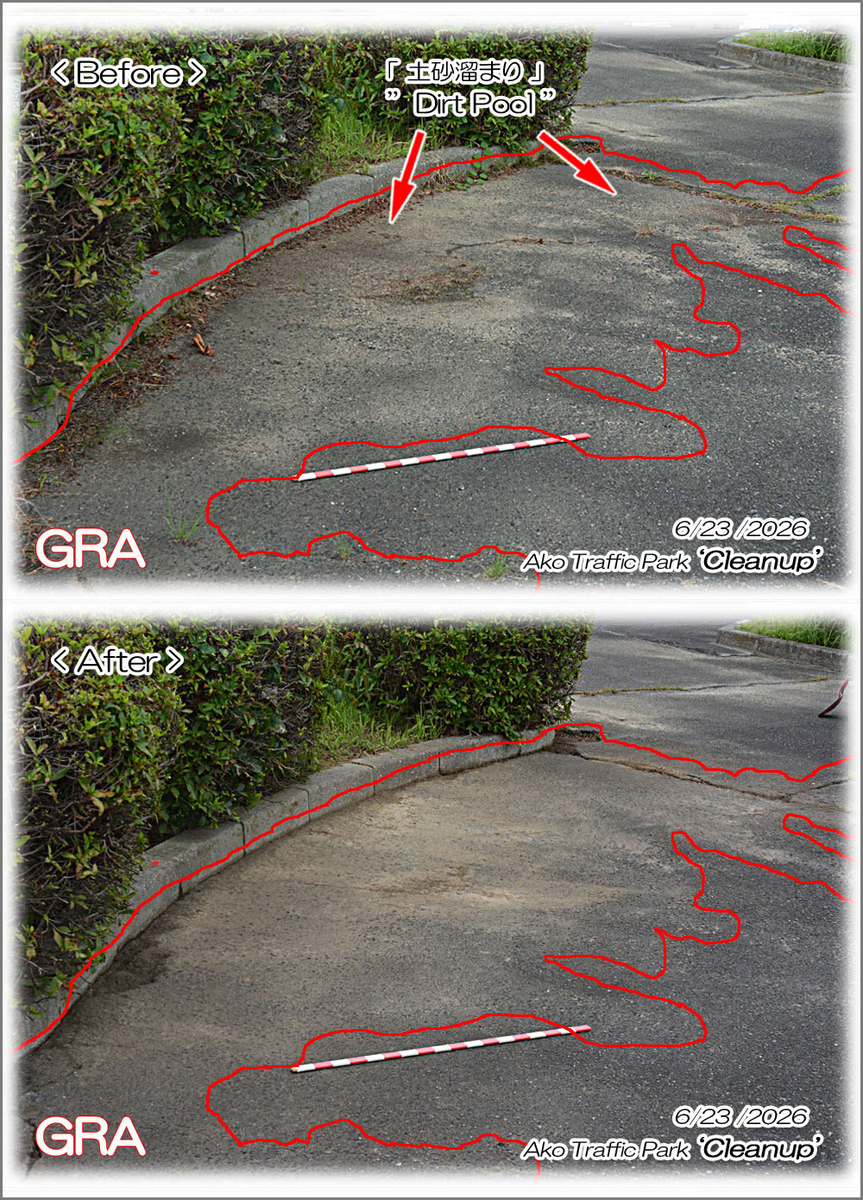
草たちがアスファルト路面を浸食して、それが路面の破壊を招いている事は何度かお伝えしている通りですが、何故か、この『ロータリーエリア』では多く見受けられます。そして、今回の清掃エリアでも路面に亀裂が走り、縁石と接する部分での崩壊は数多くありました。また、一部、崩壊した箇所をアスファルトで補修された跡も確認できましたが、草たちの勢いは止め切れていません。どちらにしても、崩壊を防ぐ為に、今回も、可能な限り、草を根から抜き去り、余分な土壌を除去していきました。
As we have mentioned several times, weeds are eroding the asphalt road surface, leading to road surface destruction. For some reason, this is particularly prevalent in the "Rotary Area." In this cleaning area, cracks were found in the road surface, and there were numerous collapses where the road meets the curb. We also observed some areas where collapsed sections had been repaired with asphalt, but this has not completely stopped the weeds' growth. In any case, to prevent further collapse, we removed as much weed as possible, including the roots, and removed excess soil.
『 今回の成果 / Results of This Session 』
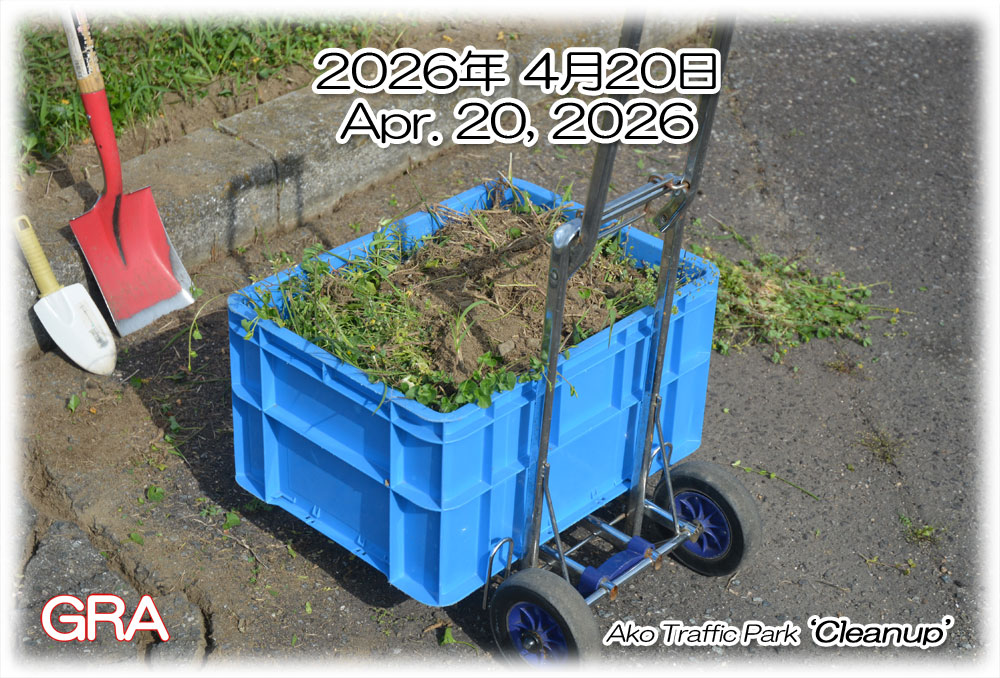
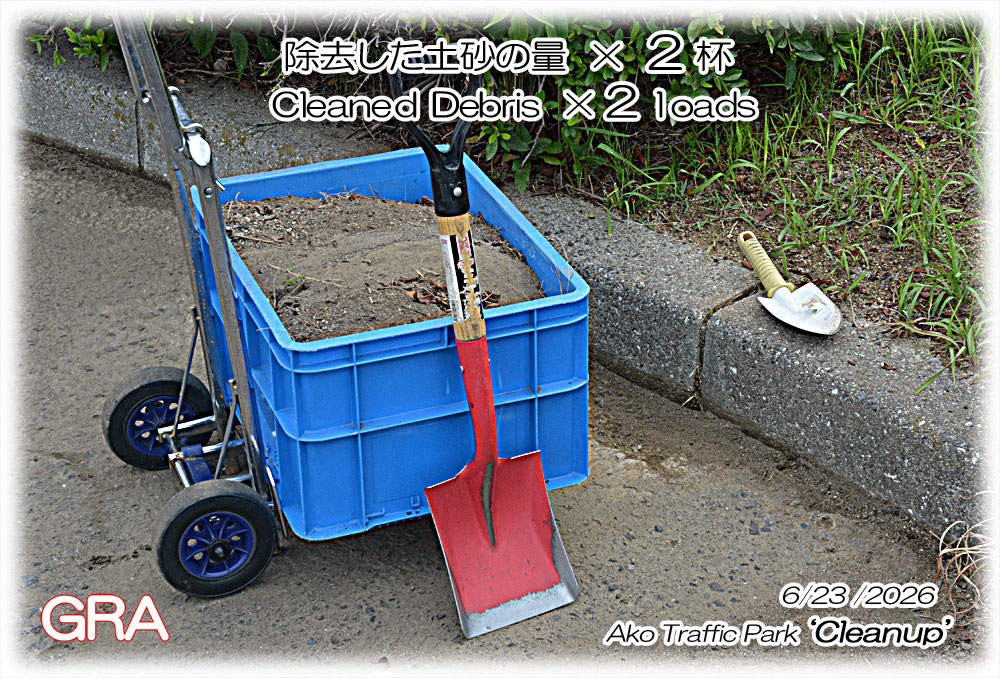
今回は、約 4時間半の作業で、約26㎡ を清掃し、除去した土砂の量が 40リットルコンテナ 2杯分でした。
This time, we cleaned approximately 26 square meters in about 4.5 hours, removing two 40-liter containers worth of soil and debris.
『 次回の目標 / Goals for Next Time 』
『ロータリーエリア』の清掃は一旦終えて、次回は、草たちによる被害が比較的少ない直線路エリアの清掃を行なう予定です。公園の中央で十字に交わる広い直線路とは異なり、使用頻度が少なかった為なのか、路面表面のアスファルト剥離も少なく、路面の状態は良いエリアです。ただ、使用頻度が少なかった関係か、路面上には砂や小石が多く散乱し、路肩には厚く土砂が堆積し、縁石部分は草たちが浸食しています。しかし、このエリアの清掃を終えた時には、幼児や児童たちにとって、更に安全に楽しめる公園になるでしょう。そして、次回は 40㎡ を目標に清掃を行ないます。
We have finished cleaning the rotary area for now. Next time, we plan to clean the straight road area, which is relatively less affected by weeds. Unlike the wide straight road that intersects in the center of the park, this area has less use, so the asphalt surface is less peeling and the road surface is in good condition. However, perhaps due to the infrequent use, there is a lot of sand and pebbles scattered on the road surface, a thick layer of soil and debris has accumulated on the shoulders, and weeds are encroaching on the curbs. However, once this area is cleaned, the park will be even safer for toddlers and children to enjoy. Next time, we aim to clean 40 square meters.

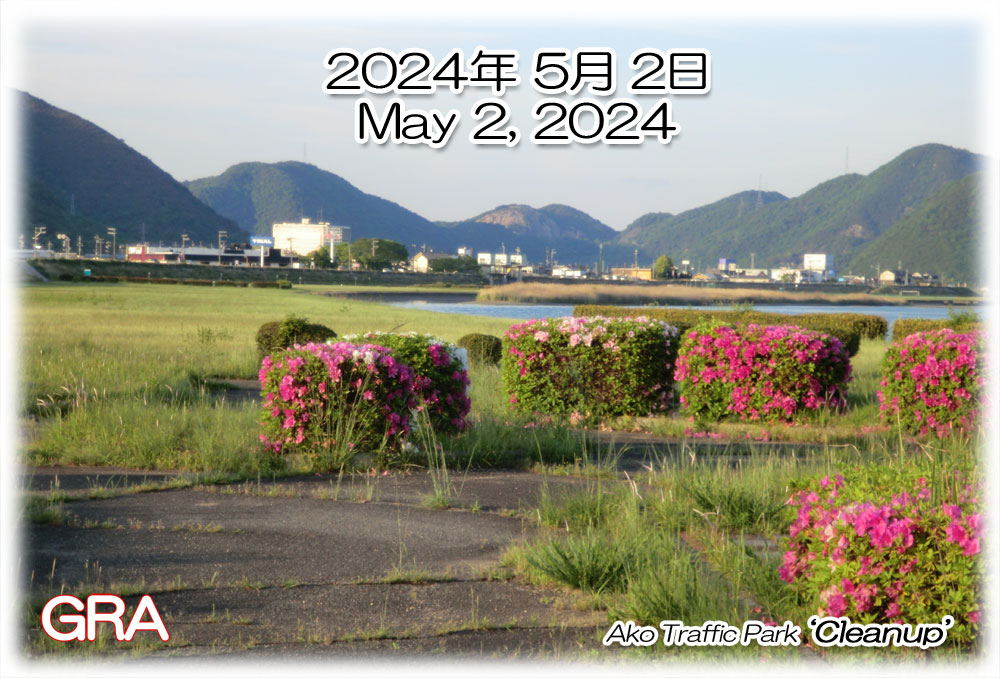
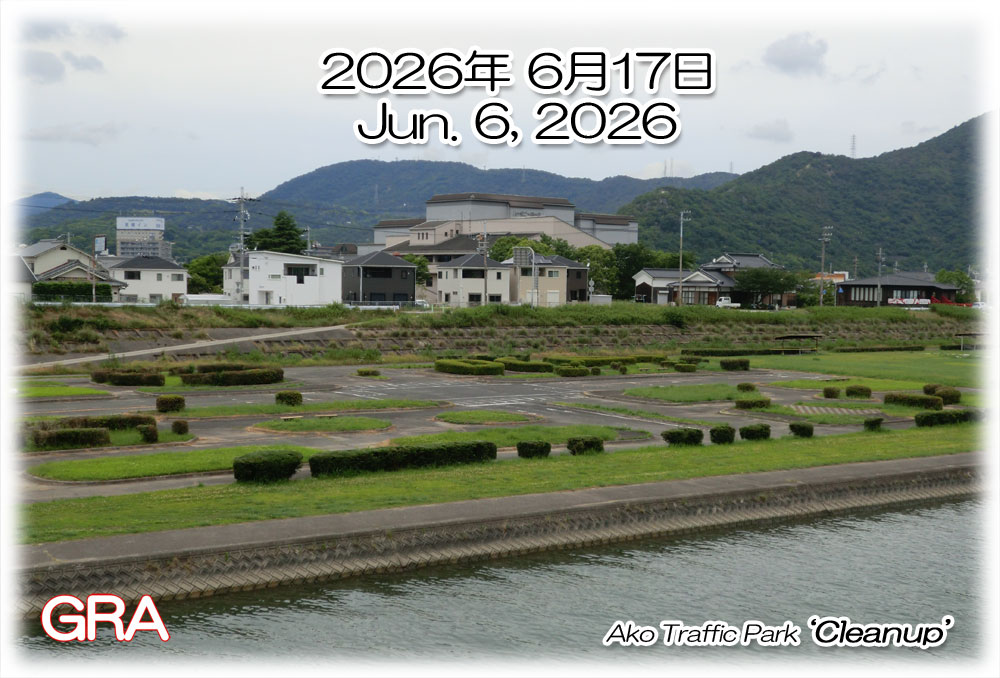
以上、赤穂市 交通公園の路面清掃は順調に進んでいますし、1年前と較べるとずっと安全な環境になっていますので、どうぞ、赤穂市や近くにお住まいの方、またはツーリングでお越しの方は、軽く練習を兼ねて、赤穂市交通公園をご利用下さい。自転車や二輪車専用の施設で、個人利用の場合は、事前予約や利用料金は不要です。
As mentioned above, the road surface cleaning at Ako City Traffic Park is progressing smoothly, and the environment is much safer than it was a year ago, so if you live in or near Ako City, or are visiting on a tour, please come and use Ako City Traffic Park as a place to do some light practice. This is a facility exclusively for bicycles and motorcycles, and no advance reservations or usage fees are required for personal use.